Author: *ASN Member Contributor
  • Featured Collection in JN: Obesity and Eating Disorders

    Featured Collection in JN: Obesity and Eating Disorders

    *This collection was prepared by Zhiping Yu, PhD, RD, LDN, Editorial Science Fellow at The Journal of Nutrition.

    This featured collection highlights seven recent studies published in The Journal of Nutrition that collectively examine how behavioral, dietary, physiological, and environmental factors influence weight management and metabolic health, while also addressing tools and mechanisms to improve monitoring, intervention effectiveness, and health outcomes related to obesity. References are listed in the end.

    The STRIPED Dietary Supplement Label Explorer: A Tool to Identify Supplements Sold with Weight-Loss, Muscle-Building, and Cleanse/Detox Claims

    This study developed a novel, publicly available tool using the Dietary Supplement Label Database Application Programming Interface (DSLD API) to classify dietary supplement labels with weight loss, muscle building, and cleanse/detox claims. Systematic heuristics outperformed deep learning for certain classifications but required more development effort. The tool enables scalable monitoring of potentially misleading supplement claims, supporting research and consumer protection.

    Read full text article, comment and share.

    Weight-Reducing Dietary Intervention Increases the Ability of Hyperinsulinemia to Suppress Serum Ghrelin Concentration in Individuals with Obesity

    This study found that individuals with obesity exhibit impaired ghrelin suppression in response to insulin, which is improved following a 12-week weight-reducing dietary intervention. The novelty lies in demonstrating that weight loss restores insulin-mediated ghrelin regulation, suggesting improved appetite control mechanisms. These findings have important implications for obesity treatment by highlighting a physiological pathway through which weight loss may enhance satiety.

    Read full text article, comment and share.

    Daily Dietary Protein Distribution Does Not Influence Changes in Body Composition During Weight Loss in Women of Reproductive Years with Overweight or Obesity: A Randomized Controlled Trial

    This randomized controlled study found that protein distribution (even vs. skewed across meals) did not significantly influence changes in body composition during weight loss in women, as all participants experienced similar reductions in body weight, fat mass, and fat-free mass. The novelty lies in directly testing protein timing patterns under controlled feeding conditions, showing no added benefit of even distribution. These findings suggest that total protein intake, rather than distribution, may be more relevant for body composition during weight loss.

    Read full text article, comment and share.

    Cafeteria Diet-Induced Obesity Alters Uterine Function by Disrupting Insulin and Sex Steroid Actions in Rats

    This study found that cafeteria diet–induced obesity disrupts uterine function in rats by reducing ovarian hormones and increasing oxidative stress, leading to altered expression of key molecular regulators. The novelty lies in linking diet-induced obesity to hormonal and oxidative changes that impair uterine physiology. These findings highlight potential mechanisms by which obesity may negatively affect female reproductive health.

    Read full text article, comment and share.

    Can Probiotics Influence Adaptive Thermogenesis Induced by Continuous Energy Restriction after a 12-Week Intervention in Adult Males Living with Obesity? A Secondary Analysis of a Randomized Clinical Trial (Sao Paulo Clinical Study of Obesity and Intestinal Microbiota)

    This study found that probiotic supplementation did not attenuate adaptive thermogenesis during continuous energy restriction in males with obesity, as both groups showed similar reductions in resting energy expenditure and body composition. The novelty lies in evaluating the role of probiotics in metabolic adaptation during weight loss using a randomized controlled design. These findings suggest limited efficacy of probiotics in modifying energy expenditure adaptations, with implications for weight loss strategies.

    Read full text article, comment and share.

    The Effect of Habitual Sleep Duration on Weight Loss during a Behavioral Weight Loss Intervention in a Mediterranean Population

    This study found that habitual long sleep duration (>8 h) is associated with reduced weight loss, lower likelihood of achieving clinically meaningful weight loss, and higher attrition during a behavioral intervention. The novelty lies in using a large, longitudinal cohort to clarify the role of sleep duration in weight loss outcomes. These findings suggest that sleep patterns, particularly long sleep, may influence intervention success and should be considered in weight management strategies.

    Read full text article, comment and share.

    The Role of Meal Timing in Appetitive Responses to Acute Exercise in Adolescents with and without Obesity: A Systematic Review and Meta-Analysis

    This review found consistent evidence that the timing of meals after acute exercise does not significantly affect energy intake overall, although effects differ by weight status, with some modulation observed in lean youth. The authors conclude that post-exercise meal timing has limited universal impact on appetite but may be phenotype-specific. Future research should explore mechanisms and individual variability, with applications in tailoring exercise–nutrition strategies to optimize appetite regulation.

    Read full text article, comment and share.

    References:

    1. Vitagliano JA, Kavanaugh JR, Gorges B, et al. The STRIPED Dietary Supplement Label Explorer: A Tool to Identify Supplements Sold with Weight-Loss, Muscle-Building, and Cleanse/Detox Claims. J Nutr. 2025;155(4):1258-1267. 
    2. Karczewska-Kupczewska M, Stefanowicz M, Nikołajuk A, Strączkowski M. Weight-Reducing Dietary Intervention Increases the Ability of Hyperinsulinemia to Suppress Serum Ghrelin Concentration in Individuals with Obesity. J Nutr. 2024;154(5):1631-1639.
    3. De Leon A, Roemmich JN, Casperson SL. Daily Dietary Protein Distribution Does Not Influence Changes in Body Composition During Weight Loss in Women of Reproductive Years with Overweight or Obesity: A Randomized Controlled Trial. J Nutr. 2024;154(4):1347-1355.
    4. Srinivasan D, Raghavendhira H, Khan MZI, Kannan S, Bhaskaran RS. Cafeteria Diet-Induced Obesity Alters Uterine Function by Disrupting Insulin and Sex Steroid Actions in Rats. J Nutr. 2025;155(6):1859-1869.
    5. Ferracini CBF, Guazzelli Marques C, Nakamoto FP, et al. Can Probiotics Influence Adaptive Thermogenesis Induced by Continuous Energy Restriction after a 12-Week Intervention in Adult Males Living with Obesity? A Secondary Analysis of a Randomized Clinical Trial (São Paulo Clinical Study of Obesity and Intestinal Microbiota). J Nutr. 2025;155(11):4043-4059.
    6. Rodríguez-Martín M, Szczerbinski L, Garaulet M, Dashti HS. The Effect of Habitual Sleep Duration on Weight Loss during a Behavioral Weight Loss Intervention in a Mediterranean Population. J Nutr. 2025;155(11):4060-4064.
    7. Moore H, Fillon A, Beaulieu K, et al. The Role of Meal Timing in Appetitive Responses to Acute Exercise in Adolescents with and without Obesity: A Systematic Review and Meta-Analysis. J Nutr. 2025;155(3):719-728.
  • Standardizing Laboratory Animal Diets: A Practical Step Toward Better Science

    Standardizing Laboratory Animal Diets: A Practical Step Toward Better Science

    *Naïma Moustaïd-Moussa, Ph.D., DFASN, FTOS, FAHA, FNAI
    President, American Society for Nutrition

    Animal models for human diseases are critical for advancing disease prevention, treatment, and overall health. They help scientists understand how diseases develop and test possible treatments in ways that are not possible in people. At the same time, there is growing concern across the research community that these studies do not always produce consistent or reproducible results, even when they focus on the same disease.

    A major contributor to these concerns includes the lack of standardization in animal diets and environments, which leads to a lack of reproducibility. When diets and environments are not standardized, it becomes difficult to compare findings across studies or repeat results. This lack of consistency slows scientific progress, increases costs, and delays the impact and translation of animal research into real-world health benefits.

    The role of diet in research quality

    To increase rigor and replicability of animal research, it is necessary to know precise diet composition, apply rigorous study design, and use relevant animal models. For diet composition, it is especially imperative to control dietary variables.

    Given these serious issues, the American Society for Nutrition (ASN) supports the development and use of next-generation standardized research diets. These are designed to serve as rigorous reference diets in animal feeding studies.

    ASN supports advancing the quality and integrity of nutrition research using animal models, supporting basic scientists, and strengthening the translational value of preclinical research. A timely white paper authored by the Laboratory Animal Nutrition Taskforce for an Education and Research Network (LANTERN) highlights persistent concerns related to the lack of standardization in diets used in animal research. The LANTERN team proposes the establishment of a resource center or consortium to provide guidance, recognition, and development of open, standardized reference diets for widely used animal models.

    ASN’s leadership and next steps

    ASN is poised to move this initiative forward and build on the LANTERN paper’s recommendations, while also taking into account two related editorials published in The Journal of Nutrition, From Chow to Conclusions: Why standardising laboratory animal diets is essential for rigor, reproducibility, and translational relevance in nutrition research and Standardising rodent and other animal diets: a call for action, both of which reinforce the urgency of improving rigor and reproducibility in this area. This is a high priority initiative to advance rigor, reproducibility, and replicability in animal research across diseases.

    Consistent with ASN research priorities and my presidential aim to advance and support rigorous basic research, ASN recommends establishing a task force that brings together key experimental animal scientists, diet manufacturers, federal partners, and other stakeholders to provide clear guidance on standardized diets. This effort will also engage the international research community to support alignment and the broader adoption of globally relevant standards.

    Join the Conversation at NUTRITION 2026

    As a first step towards establishing such a task force, ASN will convene the LANTERN authors, diet manufacturers and other interested investigators at NUTRITION 2026 to discuss next steps, including membership and goals. This effort is intended to support the task force in developing rigorous guidelines for experimental animal research that will ultimately lead to establishing a national program focused on improving research rigor, as proposed by the LANTERN group, while also positioning these efforts to inform and support broader international efforts.

    Importantly, it is critical that early career investigators and students are part of this conversation.

    Only at NUTRITION 2026
    Next-Generation Standard Reference Diets: Building Nutritional Rigor and Relevance using Replicable Diet Formulations in Animal Models of Human Disease
    Monday, July 27, 2026 | 8:30 AM – 9:30 AM ET

    Why this matters for science and health

    Improving diet standardization in animal studies has real implications for how quickly and effectively research can improve human health. A coordinated effort in this area can lead to more effective and humane research practices, enhanced rigor and reproducibility, and stronger translation of findings to humans. It can also reduce cost and time associated with both conducting animal research and applying those findings in clinical settings, ultimately promoting health and reducing the burden of disease.

    I hope to see you at NUTRITION 2026 to help us define what comes next.


    About the author:

    In addition to serving as President of the American Society for Nutrition, Dr. Moustaïd-Moussa is Executive Director of the Institute for One Health Innovation and Paul W. Horn Distinguished Professor at the Texas Tech University School of Veterinary Medicine. She is also Professor in the Department of Cell Biology and Biochemistry at Texas Tech University Health Sciences Center, Founding Director of the Obesity Research Institute, and a member of the National Academies’ Board on Agriculture and Natural Resources (BANR).

  • Vitamin D and COVID: A precautionary tale

    Vitamin D and COVID: A precautionary tale

    *By David S. Seres, MD, ScM, PNS, director of medical nutrition and professor of medicine in the Institute of Human Nutrition, Columbia University Medical Center, New York, NY

    Recent ASN blogs explored the complex bidirectional links between the COVID-19 pandemic and food insecurity , and effective nutritional strategies to alleviate the global burden of COVID-19. Some of those nutritional strategies included vitamin D. A different take on vitamin D supplementation and COVID-19 outcomes is shared below.

    In April of 2020, when widespread panic about COVID-19 was taking hold, I received a call from a journalist asking: “Did you see that article?”.  He was referring to a pre-review paper that had been posted to the website of a prestigious journal.  It was an analysis of historic vitamin D levels in several countries, to which the authors had correlated one COVID outcome or another.  It made for interesting hypotheses at best.  But the authors concluded that wholesale vitamin D supplementation could improve COVID outcomes.  The story that vitamin D might prevent COVID, based on this paper, appeared on national news two nights later.  It had not been peer reviewed nor accepted for publication, and the journal subsequently rejected the paper.

    Since then, the number of hits when searching for “vitamin D and COVID” on PubMed has risen to over 1400.  The vast majority of these are observational studies, systematic review/meta-analysis of observational studies, or narrative reviews.  Because of a strong association between vitamin D levels and COVID outcomes, most promote a potential role for vitamin D supplementation to decrease COVID transmission, morbidity, or mortality, and refer to low levels of vitamin D as “deficiency”.  But the few randomized trials have failed to demonstrate any benefit.

    There is little controversy that vitamin D is critical for a plethora of normal immunological functions, that true deficiency is likely to worsen infectious outcomes including those from COVID, and that there are strong associations between vitamin D levels and numerous COVID-related outcomes in observational studies (e.g. retrospective, cohort, etc.). Why then do all the randomized trials to date fail in the aggregate to live up to the great promise that vitamin D supplementation will prevent or ameliorate COVID, except perhaps in those with the very lowest levels? 

    The answer lies partly in the inherent risk of drawing conclusions about cause from observational studies.  Equally important, vitamin D physiology easily explains the concordance between vitamin D levels and outcomes in COVID and other disease states such as that seen in critical illness.  That is, vitamin D is a fat-soluble vitamin transported in the bloodstream on a carrier protein.  The level of vitamin D binding protein (VDBP), like albumin, drops in the face of systemic inflammation.  The lower the carrier protein, the lower the measured level of that which is carried.  But is this truly a deficiency? 

    To my understanding, a deficiency state occurs when the lack of a substance causes a pathological condition, which in turn is reversed or prevented when the substance is replaced or supplemented.  Disease activity often results in low blood levels of numerous nutrients, but these low levels do not represent true deficiencies.  Take calcium, for example.  Most circulating calcium is carried by albumin. Every clinician is taught to adjust the interpretation of calcium levels based on albumin levels.  A low calcium level, which is due to a low albumin level, which in turn is due to systemic inflammation, is not a deficiency state.  If supplementation given to patients with low vitamin D levels does not improve outcomes, then that low level should not be considered a deficiency.  Thus, a low vitamin D level is not a surrogate for deficiency in someone who is ill.  Rather, it is a surrogate for severity of illness.  Low vitamin D levels are strongly predictive of outcomes, but not predictive of a response to supplementation in sick patients. 

    This type of relationship between nutrients and disease acuity is very common but often ignored in our zeal to demonstrate the importance of nutrition.  In my opinion, there are two critically important reasons this should be discussed.  First, continued expenditure for observational studies linking vitamin D to COVID outcomes are unwarranted.  Second, there is continuing damage being done to the credibility of science when scientists and other professionals do not monitor how research findings are discussed with the science consumer. When benefits are touted or even theorized, and then disproven, the public’s trust is betrayed and scientific credibility lost.    

    Research published in ASN Journals is providing public health professionals and policy makers with the data and tools needed to mitigate the pandemic’s effect on human health and nutrition in general. We invite you to peruse all four ASN Journals for more information on the bidirectional relationship between COVID-19 and nutrition. A quick search using the term “COVID-19” will lead you to hundreds of articles. In addition, if you are researching any aspect of the relationship between nutrition and COVID-19 disease, we invite you to submit your findings for publication in an ASN Journal.

  • NHANES: Opportunities for Revitalization

    NHANES: Opportunities for Revitalization

    Webinar Summary Prepared by the Committee on Advocacy and Science Policy

    *By Christine Taylor, PhD, Chair of ASN’s Committee on Advocacy and Science Policy

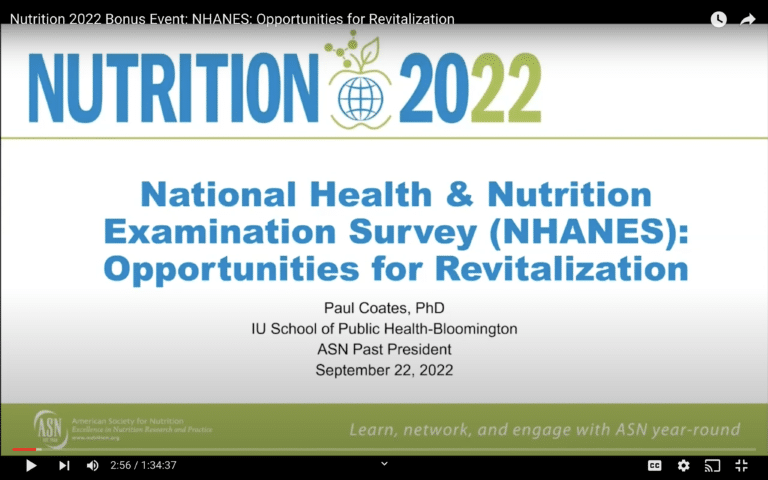
    A recent **webinar sponsored by ASN’s Committee on Advocacy and Science Policy (CASP) served to underpin the ASN interest in supporting and strengthening the National Health and Nutrition Examination Survey (NHANES). NHANES — which provides an essential foundation for policy, research, clinical decisions, program planning and more – faces emerging challenges that cannot be ignored by its numerous and diverse stakeholders. The webinar’s goal was to inform the ASN membership about NHANES and to explore the nature of the advocacy required to ensure that this survey moves into the future as a reliable source of critical data.

    Dr. Paul Coates, ASN Past-President, opened the webinar and provided an overview of the wide application and vital nature of the NHANES. He emphasized its many applications in public health policy, in the development of federal regulations and programs such as school lunch, in establishing science-based standards and clinical practices, and in basic research. Dr. Coates noted the high regard in which the NHANES staff are held as well as their competence, diligence, and hard work. He also noted that the contractual process for the 2023-2033 survey precluded staff from offering an NHANES update for the webinar, but an NHANES staff member was able to participate in the brief panel discussion at the close of the session. Dr. Coates introduced the remainder of the program by pointing out that the goal was not to dig down into the detailed specifics of data collection, but to consider the larger overarching challenges that NHANES faces.

    The program continued with two speakers who set the stage for further discussion. Dr. Christine Taylor, CASP Chair, began by pointing to issues stemming from stagnant funding and which affect current survey operations as well as the ability to innovate. She then outlined concerns related to decreasing survey response rates as well as the likelihood that the sample size is too small to provide the level of granular data needed to address the increasing interest in health disparities. Dr. Jaime Gahche, National Institutes of Health, described the nutrition-related components of the survey.

    The final two speakers discussed the nature of the challenges in more detail, while offering thoughts about possible solutions. Mr. Charles Rothwell, former Director of the National Center for Health Statistics, offered a general stakeholder perspective and outlined options to potentially meet the critical needs for modernization, innovation and the study of new methodologies. Dr. Cathie Woteki, Iowa State University, reflected on the nutrition perspective. She highlighted an interest in updating the dietary component of the survey, which was put in place more than 30 years ago and therefore may need updating to be consistent with current interests and needs within the nutrition community.

    The webinar discussions offered several take-away points. Most health surveys are under increasing pressure to modernize and adapt, and NHANES is no exception. While funds are always a central topic and are limited in any case, advocating for funding alone is not sufficient. A broader approach is needed to address the methodological challenges involved in conducting a survey such as NHANES. Questions were raised about: the constraints the survey must operate under; how it can continue to meet the needs of its stakeholders in the future; and how it begins to prepare for the future, including exploration of newer technologies and potentially different data collection goals and methodologies while preserving the ability to maintain key time trends. Second, the complicated nature of these considerations coupled with the value gained when there is input from varied experts led to the suggestion that ASN support efforts to request that the National Academies of Sciences, Engineering and Medicine (NASEM) convene an expert committee to review the NHANES and make recommendations about ways to meet its future challenges. It was acknowledged that this task requires that ASN work to build alliances around a NASEM study. Third, it was suggested that CASP continue to explore the questions about NHANES and expand the webinar discussions by organizing a workshop focused on the future of NHANES. A broad community of participants beyond nutritionists should be included. Finally, it was pointed out that NHANES is critical to many programs within the U.S. Department of Agriculture. Therefore, given the upcoming activities surrounding the authorization of the Farm Bill, ASN could include a focus on NHANES and a NASEM study in its recommendations to Congress concerning the components of the bill. The importance of ASN advocacy around these issues was pointed out.

    CASP found the webinar informative and will consider how best to incorporate the options offered during the discussions.


    **Recording and slides on the NUTRITION 2022 meeting platform:
    https://www.eventscribe.net/2022/ASN/index.asp?sessionTarget=1128057

    • To view the recording, individuals can click ‘View Recording’ button on the lower right.
    • To view slides, individuals can click on each individual presentation title at the bottom of the popup, and then click the ‘Handouts’ button for each individual presentation.
  • This Giving Tuesday, Help Propel the Future of Nutrition!

    This Giving Tuesday, Help Propel the Future of Nutrition!

    Join your colleagues and give back to your professional home this holiday season

    The American Society for Nutrition Foundation expands resources, drives interest in nutrition-related careers, supports early-career scientists and increases the skills, infrastructure, and resources of investigators, practitioners, and institutions worldwide. As the philanthropic arm of ASN, the ASN Foundation raises funds to support and create opportunities for the field of nutrition science and practice.

    • Providing much needed Awards and Scholarships to the diverse spectrum of ASN members from students to lifelong investigators;
    • Enhancement of ASN’s Online Learning platform – more free webinars, and greater online resources for members;
    • Implementation of the recommendations and outcomes from ASN’s “Ensuring Trust in Nutrition Science,” an initiative to enhance the quality and credibility of nutrition research in both the scientific community and the public sector;
    • And, continue our Diversity, Equity and Inclusion campaign launched in 2021.

    It is only through charitable donations that the ASN Foundation can provide critical resources and opportunities not funded through ASN member dues.

    Don’t wait! Celebrate this Giving Season with a gift to the ASN Foundation. Your donation will help us advance our mission and pursue new opportunities to improve global health, foster diversity and inclusion, and ensure future generations of leadership in nutrition science and practice. No donation is too small or too big. Learn more about the ASN Foundation and make your 2022 tax-deductible donation at nutrition.org/asn-foundation/donate/

    Thank you in advance for your support of the ASN Foundation and the nutrition community.

    Sincerely, 

    *Catherine E. Woteki, PhD
    Chair, ASN Foundation

    There are so many ways you can make a financial impact in the field of nutrition through your ASN Foundation this giving season. Support a scholarship for students, give to a program for early career professionalshonor your mentor or other special person, or support ASN and ASNF’s ongoing diversity, equity, and inclusion efforts. 

    All donations received before December 31, 2022, including gifts of stock, are tax deductible to the full extent of the law and can be deducted from your taxes this calendar year. Giving is easy and only takes a minute of your time. All donations make a difference!

  • Celebrating Sexual and Gender Diversity

    Celebrating Sexual and Gender Diversity

    *Heather Schier is a PhD student at the Ohio State University and recently served as an ASN Science Policy Fellow. Her research employs community-engaged, mixed methods to elevate the voices of transgender and gender diverse youth.

    As we celebrate sexual and gender diversity, sobering discriminatory legislation (240+) is being proposed (and passed) in states across the US. Policy impacts the social determinants of health and therefore has downstream nutrition implications. For example, insufficient anti-bullying policies in schools1, school curriculum and topic censoring, and other bans and restrictions may further alienate LGBTQIA+ individuals and promote discrimination. Social rejection, discrimination, and stigma manifest as stress, compromised mental health, suicidality, food insecurity, disordered eating patterns, increased allostatic load, inflammation, overweight/obesity, and chronic disease2.

    This is concerning when we consider the known disparities experienced by the LGBTQIA+ community. For example elevated risk of overweight and obesity among lesbian and bisexual women3,4, HIV among gay and bisexual men5, and mixed findings suggest elevated risk of some cancers4,6 and cardiovascular disease4,7 among LGB adults. Fewer studies have explored disparities among transgender individuals. Those that have been conducted indicate socioeconomic and health disparities persist among transgender individuals8–11. This includes elevated rates of depression, anxiety, and psychological distress10,12. Further, disproportionate rates of poor general health10,13, food insecurity14–16, and disordered eating patterns1,14,16,17.

    The disparities are stark and can’t be ignored. However, combatting health disparities does not stop at identifying prevalence. In alignment with the Health Equity Promotion Model18, identifying the strengths and pathways that promote health is equally important. The LGBTQIA+ communities have strength, resilience, persistence, adversity, and empathy. In working with LGBTQIA+ communities to leverage those strengths we begin to elevate solutions.

    Research that applies this model of empowerment and celebration offers the community and advocates the tools to combat these disparities through interventions and policy change.

    These articles summarize recently published research related to nutrition considerations for LGBTQIA+ communities:

    Sexual orientation–based disparities in food security among adults in the United States: results from the 2003–2016 NHANES, The American Journal of Clinical Nutrition, December 2021

    In the US, 10.5% of the general population experience food insecurity. These rates are disproportionately higher among sexual minority (e.g., lesbian, gay, bisexual, and otherwise non-heterosexual) individuals, likely a manifestation of discrimination and stigma. Data from NHANES revealed a statistically significant difference in household food security between sexual minority groups and their heterosexual counterparts. Rates and relative risk of moderate and severe food insecurity were 20-70% higher among all sexual minority groups compared to heterosexuals after adjusting for sex, race, ethnicity, and age. The highest rates were among bisexuals19.

    An Examination of the Sex-Specific Nature of Nutrition Assessment within the Nutrition Care Process: Considerations for Nutrition and Dietetics Practitioners Working with Transgender and Gender Diverse Clients, Journal of the Academy of Nutrition and Dietetics, February 2022

    The Nutrition Care Process (NCP) directs registered dietitians (RD) when conducting nutrition assessments. Many domains of the nutrition assessment are sex-specific, posing a unique question for those serving a transgender or gender diverse (TGGD) population. Applying clinical logic, Linsenmeyer et. al., offer suggested approaches for clinicians working with TGGD patients to deliver gender affirming care. Those suggestions include: use references consistent with sex assigned at birth if the patient has not medically transitioned (e.g., hormone therapy); individualize approach based on the patient’s medical transition status using the World Professional Association for Transgender Health Standards of Care; and report data as a range between male and female references. Additionally, clinicians can affirm patients by using correct names and preferred pronouns, updating medical records to reflect the patient’s gender identity, and using gender neutral terms (e.g., when describing the body). The article details hypothetical case studies for application20.

    Opportunities for Action

    Regardless of your area of research, ASN members can take steps to celebrate and affirm sexual and gender diversity. A few opportunities for action are listed below:

    • Gender affirming language improves mental health, sense of belonging, and reduces suicidality. This includes using preferred pronouns, gender neutral terms (e.g., when discussing the body), and refraining from deadnaming.
    • Reference the National Academies of Science, Engineering, and Medicine’s report on measuring sex, gender identity, and sexual orientation. Ubiquitous adoption of these recommendations improves visibility of diverse sexual orientations and gender identities across data and is a critical step toward elucidating pathways to health disparities and promotion among LGBTQIA+ communities. 
    • Support pathways to increase LGBTQIA+ representation across nutrition science professions.
    • Empower LGBTQIA+ communities, elevating community-specific assets (e.g., size and strength of community, adversity, resilience) to identify effective solutions to address health inequities.
    • Prioritize community-based participatory research methods if and when possible.
    • Fund and evaluate interventions that prevent overweight/obesity, food insecurity, disordered eating behaviors, among other disparities.
    • To learn more about ways to advocate for LGBTQIA+ communities, visit: The Trevor Project, UCLA Williams Institute, ACLU, or The National Center for Transgender Equality

    Reference

    1. Lessard LM, Wang EY, Watson RJ. School Safety Among Sexual and Gender Minority Adolescents: Implications for Eating and Weight Control Behaviors. J Sch Health. 2021;91(10):788-795. doi:10.1111/JOSH.13069
    2. Tan KKH, Treharne GJ, Ellis SJ, Schmidt JM, Veale JF. Gender Minority Stress: A Critical Review. J Homosex. 2020;67(10):1471-1489. doi:10.1080/00918369.2019.1591789
    3. Boehmer U, Bowen DJ, Bauer GR. Overweight and obesity in sexual-minority women: Evidence from population-based data. Am J Public Health. 2007;97(6):1134-1140. doi:10.2105/AJPH.2006.088419
    4. Case P, Austin B, Hunter DJ, et al. Sexual Orientation, Health Risk Factors, and Physical Functioning in the Nurses’ Health Study II. https://home.liebertpub.com/jwh. 2004;13(9):1033-1047. doi:10.1089/JWH.2004.13.1033
    5. CDC. HIV and Gay and Bisexual Men. Published online 2021. Accessed May 22, 2022. www.cdc.gov/hiv/group/msm.
    6. Dibble SL, Roberts SA, Nussey B. Comparing breast cancer risk between lesbians and their heterosexual sisters. Women’s Heal Issues. 2004;14(2):60-68. doi:10.1016/J.WHI.2004.03.004
    7. Fredriksen-Goldsen KI, Emlet CA, Kim HJ, et al. The Physical and Mental Health of Lesbian, Gay Male, and Bisexual (LGB) Older Adults: The Role of Key Health Indicators and Risk and Protective Factors. Gerontologist. 2013;53(4):664-675. doi:10.1093/GERONT/GNS123
    8. Kenagy GP. Transgender Health: Findings from Two Needs Assessment Studies in Philadelphia. Health Soc Work. 2005;30(1):19-26. doi:10.1093/HSW/30.1.19
    9. Xavier J, Jessica Xavier M, Julie Honnold MA, et al. Members of the Study Team. Published online 2007.
    10. Fredriksen-Goldsen KI, Cook-Daniels L, Kim HJ, et al. Physical and Mental Health of Transgender Older Adults: An At-Risk and Underserved Population. Gerontologist. 2014;54(3):488-500. doi:10.1093/GERONT/GNT021
    11. Grant, J.M., Mottet, L.A., Tanis J. Injustice at Every Turn : A Report of the National Transgender Discrimination Survey. Sociology. 2013;(May):120-198. Accessed May 22, 2022. https://www.semanticscholar.org/paper/Injustice-at-Every-Turn%3A-A-Report-of-the-National-Grant-Motter/0d2215528d2687e79db63a5381580de92d383090
    12. Bockting WO, Miner MH, Swinburne Romine RE, Hamilton A, Coleman E. Stigma, mental health, and resilience in an online sample of the US transgender population. Am J Public Health. 2013;103(5):943-951. doi:10.2105/AJPH.2013.301241
    13. Fredriksen-Goldsen KI, Kim H-J, Emlet CA, et al. The Aging and Health Report The Aging and Health Report Disparities and Resilience among Lesbian, Gay, Bisexual, and Transgender Older Adults.
    14. Arikawa AY, Ross J, Wright L, Elmore M, Gonzalez AM, Wallace TC. Results of an Online Survey about Food Insecurity and Eating Disorder Behaviors Administered to a Volunteer Sample of Self-Described LGBTQ+ Young Adults Aged 18 to 35 Years. J Acad Nutr Diet. 2021;121(7):1231-1241. doi:10.1016/J.JAND.2020.09.032
    15. Russomanno J, Patterson JG, Jabson JM. Food Insecurity Among Transgender and Gender Nonconforming Individuals in the Southeast United States: A Qualitative Study. Transgender Heal. 2019;4(1):89. doi:10.1089/TRGH.2018.0024
    16. Linsenmeyer WR, Katz IM, Reed JL, Giedinghagen AM, Lewis CB, Garwood SK. Disordered Eating, Food Insecurity, and Weight Status among Transgender and Gender Nonbinary Youth and Young Adults: A Cross-Sectional Study Using a Nutrition Screening Protocol. LGBT Heal. 2021;8(5):359-366. doi:10.1089/LGBT.2020.0308/ASSET/IMAGES/LARGE/LGBT.2020.0308_FIGURE2.JPEG
    17. Guss CE, Williams DN, Reisner SL, Austin SB, Katz-Wise SL. Disordered Weight Management Behaviors, Nonprescription Steroid Use, and Weight Perception in Transgender Youth. J Adolesc Heal. 2017;60(1):17-22. doi:10.1016/J.JADOHEALTH.2016.08.027
    18. Fredriksen-Goldsen KI, Simoni JM, Kim HJ, et al. The health equity promotion model: Reconceptualization of lesbian, gay, bisexual, and transgender (LGBT) health disparities. Am J Orthopsychiatry. 2014;84(6):653. doi:10.1037/ORT0000030
    19. Gibb JK, Shokoohi M, Salway T, Ross LE. Sexual orientation–based disparities in food security among adults in the United States: results from the 2003–2016 NHANES. Am J Clin Nutr. 2021;114(6):2006-2016. doi:10.1093/AJCN/NQAB290
    20. Linsenmeyer W, Garwood S, Waters J. An Examination of the Sex-Specific Nature of Nutrition Assessment within the Nutrition Care Process: Considerations for Nutrition and Dietetics Practitioners Working with Transgender and Gender Diverse Clients. J Acad Nutr Diet. 2022;122(6):1081-1086. doi:10.1016/j.jand.2022.02.014
  • Child Nutrition Reauthorization

    Child Nutrition Reauthorization

    *ASN Science Policy Fellows, Heather Schier and Jessica Garay, PhD, RD

    Ensuring food for children has been a national interest since before World War II. Federal child nutrition programs provide the support and infrastructure not only to feed children, but more recently to facilitate healthier diets for children. Since the passage of the National School Lunch Act in 1946, followed by the Child Nutrition Act of 1966, a variety of programs have been authorized, governed, and, in most cases, allocated permanent funding by Congress under the broad term known as Child Nutrition Reauthorization (CNR). Every 5 years, Congress is tasked with reviewing the statutes related to these programs, and reauthorizing them with ongoing funding. However, the last time this was undertaken was in 2010 with the passage of the Healthy, Hunger-Free Kids Act. Despite the fact that this law expired in 2015, the programs governed by CNR have continued to operate due to either permanent appropriations or fiscal year appropriations. In that time the COVID-19 pandemic highlighted and exacerbated two ongoing and salient public health issues: child food insecurity and obesity. The current Congress has begun to address CNR with a variety of marker bills (a compilation of several related provisions to be eventually incorporated into the larger bill; see below). It represents an opportunity to strengthen child nutrition programs to best support the health of our nation’s children. 

    What the Child Nutrition Reauthorization covers

    As the name implies, CNR usually includes a variety of child nutrition programs administered by the U.S. Department of Agriculture (USDA), including school meals (National School Lunch Program, NSLP, and School Breakfast Program, SBP), the Summer Food Service Program, Special Milk Program, and the Child and Adult Care Food Program (CACFP). In addition, CNR will include the Special Supplemental Program for Women, Infants, and Children (WIC) and the related WIC Farmers Market Nutrition Program. Lastly, programs such as the Farm to School Grant Program and the Fresh Fruit and Vegetable Program are likely to be addressed during CNR (although the latter program has also been previously amended in the Farm Bill, but not most recently in 2018).

    With the passage of the 2010 Healthy, Hunger-Free Kids Act, several changes were enacted relating to child nutrition. Specifically, a Community Eligibility Provision (CEP) option was developed and gradually rolled out across the U.S. The CEP gave school districts who were enrolled in the NSLP/SBP the ability to serve all students a free meal. This provision became highly utilized during COVID-19 as a way to ensure that students were still receiving food even while at home during quarantine. The 2010 Act also directed the USDA to 1) revise school meal nutrition standards and 2) develop nutrition standards for “competitive foods” available for purchase in school that are not part of school meals. This bill also led to a simplification of the application process for school meals. Outside of school meals, the 2010 Act required state WIC programs to start providing WIC benefits via Electronic Benefits Transfer instead of paper vouchers no later than 2020. 

    For the current reauthorization, several marker bills have been introduced. Below is a select list of bills related to CNR: Access to Healthy Food for Young Children Act (S.1270), Summer Meals Act (S.1170/H.R.783), School Food Modernization Act (S.876/H.R.4379), the Food and Nutrition Education in Schools Act (S.1421/H.R.4282), the Farm to School Act (S.1328/H.R.1768) and the Wise Investment in Children (WIC) Act of 2021 (S.853/H.R.2011). 

    Regarding school meals, a proposal to include funding for free school meals for all children has been proposed in the American Families Plan (rather than CNR) and is currently under consideration for Fiscal Year 2022 budget appropriations. In the event that proposal is not included, a separate bill, the Universal School Meals Program Act of 2021 (S.1530/H.R.3115) has also been introduced and may end up as part of CNR. 

    Why supporting Child Nutrition Reauthorization is important

    In the U.S., millions of children benefit from child nutrition programs authorized through CNR – namely those residing in low-income households. As a result of participation in either the NSLP and/or SBP, particularly after the recent improvement in program nutrition standards, children across the U.S. have experienced prevention of excess weight gain and improved food security, dietary quality, health outcomes, and learning outcomes (1-3). 

    In another example, data consistently shows that WIC is a cost-effective program improving health outcomes for low-income families. This includes positive birth outcomes, increased child intake of essential vitamins and minerals, and reduced risk of obesity among child participants (4-7). These documented benefits underscore the need to ensure that WIC benefits are accessible to all eligible individuals. This includes strengthening access for tribal and indigenous communities and expanding eligibility for postpartum women for two years and children until age six.  

    Ongoing and expanded research is needed to continue to evaluate the effectiveness of these programs and inform policies that impact child nutrition. As we continue to combat the negative health consequences of poor diet (access and quality) on childhood health and obesity, we must consider the bidirectional relationship between policy and research. CNR provides the platform to advocate for nutrition research funding, critical for effectively evaluating and advocating for child nutrition programs. 

    ASN CNR Priorities

    ASN advocates for the support of robust nutrition research to evaluate the effectiveness of the NSLP/SBP, Summer Food Service Programs, WIC, CACFP, Fresh Fruit and Vegetable Program, and the Farm to School Grant Program on improving diet quality and health outcomes of children participating. Additionally, several other nutrition-focused organizations have released their own CNR priorities, including FRAC, NANA, and AND. Lastly, if you are interested in hearing more about research and advocacy opportunities related to CNR, join the ASN webinar “Child Nutrition Reauthorization: Nutrition Opportunities and Considerations” on Wednesday September, 29th at 1:00 PM EST. Learn more and register online.

    References

    1. Gundersen, C., Kreider, B., & Pepper, J. (2012). The impact of the National School Lunch Program on child health: A nonparametric bounds analysis. Journal of Econometrics, 166(1), 79-91.
    2. Turner, L, & Chaloupka, FJ (2015). Improvements in School Lunches Result in Healthier Options for Millions of U.S. Children: Results from Public Elementary Schools between 2006 – 07 and 2013 – 14 – A BTG Research Brief. Chicago, IL: Bridging the Gap Program, Health Policy Center, Institute for Health Research and Policy, University of Illinois at Chicago
    3. Ralston, Katherine, Katie Treen, Alisha Coleman-Jensen, and Joanne Guthrie (2017). Children’s Food Security and USDA Child Nutrition Programs, EIB-174, U.S. Department of Agriculture, Economic Research Service
    4. Khanani I, Elam J, Hearn R, Jones C, Maseru N (2010). The impact of prenatal WIC participation on infant mortality and racial disparities. American Journal of Public Health, 100(Supplement 1):S204-S209.
    5. Au LE, Gurzo K, Paolicelli C, Whaley SE, Weinfield NS, Ritchie LD (2018). Diet quality of US infants and toddlers 7–24 months old in the WIC Infant and Toddler Feeding Practices Study-2. The Journal of Nutrition, 148(11):1786-1793. The HEI is a measure of diet quality used to assess how well a set of foods aligns with key recommendations of the Dietary Guidelines for Americans. An HEI score of 100 indicates that an individual has consumed at least the recommended daily values of 10 dietary components.
    6. Weinfield NS, Borger C, Au LE, Whaley SE, Berman D. Ritchie LD (2020). Longer participation in WIC is associated with better diet quality in 24-month-old children. Journal of the Academy of Nutrition and Dietetics, 120(6), 963-971; Au LE, Paolicelli C, Gurzo K, Ritchie LD, Weinfield NS, Plank KR, Whaley SE (2019). Contribution of WIC-eligible foods to the overall diet of 13-and 24-month-old toddlers in the WIC Infant and Toddler Feeding Practices Study-2. Journal of the Academy of Nutrition and Dietetics, 119(3): 435-448.
    7. Daepp MI, Gortmaker SL, Wang YC, Long MW, Kenney EL (2019). WIC food package changes: Trends in childhood obesity prevalence. Pediatrics, 143(50): e20182841.
  • ASN Supports Pride Month

    ASN Supports Pride Month

    *Heather Schier (she/her/hers) is a cisgender Graduate Research Associate in Dr. Carolyn Gunther’s Community Nutrition Research Lab and a doctoral student in the Ohio State Interdisciplinary Ph.D. Program in Nutrition. Her research interests include nutrition-related issues among transgender youth and nutrition policy. She is currently an American Society for Nutrition Science Policy Fellow.


    During the month of June, we celebrate the LGBTQIA+ community, recognize the contributions of individuals and honor the ongoing liberation movement since (and before) the Stonewall riots of 1969. Discrimination and health inequities continue to negatively impact sexual and gender minority groups. A recent survey indicated LGBTQIA+ young adults were at higher risk for experiencing nutrition insecurity, disordered eating patterns, and depression. These disparities were highest among transgender males (1).

    Bolstering the body of nutrition-related evidence specific to sexual and gender identities strengthens communities and the nutrition science field. Let’s do it with PRIDE.

    A few years ago, as a graduate student, I attended a research talk on Transgender Care targeting an allied healthcare professional audience. I returned home and began furiously searching the scholarly databases for literature to understand the nutrition related considerations for transgender individuals. This search didn’t take long. The literature is rather limited for transgender adults and bare for transgender youth. We, as a scholarly community, ought to ask ourselves, why?

    Nearly 1.4 million (0.6%) adults and 150,000 (0.7%) youth (ages 13 to 17) identify as transgender or gender non-binary (TGGNB) in the United States (2). These figures are comparable to the prevalence of Americans with Type 1 Diabetes (which we have strong nutrition guidelines for, right?). To date, there are no nutrition guidelines for TGGNB individuals published by the Academy of Nutrition and Dietetics, in large part due to the paucity of research required to develop nutrition recommendations. This deficiency of evidence hinders healthcare professionals’, including registered dietitians’ (RD), ability to best care for their TGGNB patients. Encouragingly, efforts to promote health equity and celebrate TGGNB health are emerging. Recent work published through the American Society for Nutrition journals have highlighted the benefits of brief educational modules to improve RDs knowledge in interacting with TGGNB individuals (3), protocols for screening disordered eating and food insecurity for TGGNB youth and adolescents (4), and a scoping review describing the extent, range and nature of current literature related to nutrition considerations for hormone therapy and health outcomes in transgender individuals (5). Research initiatives to elucidate the clinical nutrition and psychosocial implications for TGGNB youth and adults associated with medically transitioning (e.g., hormone therapy, gender affirming surgery, administration of puberty blockers and other supplementation) and approaches which celebrate TGGNB health are long overdue.

    The development of clinical practice guidelines for nutrition professionals working with the transgender community is dependent on a robust body of research.  We champion evidence-based practice, but until there is sufficient evidence, we are mostly using our clinical judgments or opinions.  More research is truly the first step towards optimal gender-affirming nutrition care.

    Dr. Whitney Linsenmeyer

    Are we asking the necessary questions to rigorously study dietary behaviors and nutritional status of LGBTQIA+ individuals? Sex and gender differences are often overlooked in research design, study implementation, and general scientific inquiry and reporting (6). TGGNB identification is grossly overlooked due to the conflation of sex and gender (male or female) in nutrition surveillance programs. This has partly contributed to a dearth of and limited ability to harmonize data (7). For example, the United States Census, the National Health and Nutrition Examination Survey (NHANES) and the National Health Interview Survey (NHIS) do not ask participants about their gender identity. The Sex and Gender Equity in Research (SAGER) guidelines offer recommendations for gender-sensitive approaches. This includes adopting the two-question method for distinctly assessing sex and gender (8). This change could yield multiple benefits. Importantly, it gives space for individuals to be seen and celebrated as they identify. Secondly, it is the first critical step to facilitate the pooling and harmonization of data. Dr. Whitney Linsenmeyer, assistant professor of nutrition and dietetics at Saint Louis University and spokesperson for the Academy of Nutrition and Dietetics, explains, “The development of clinical practice guidelines for nutrition professionals working with the transgender community is dependent on a robust body of research.  We champion evidence-based practice, but until there is sufficient evidence, we are mostly using our clinical judgments or opinions.  More research is truly the first step towards optimal gender-affirming nutrition care.”

    Looking beyond how we collect data, who is involved in the research process?  Diversity is more than race and ethnicity – but also sexual orientation, gender identity, class, ability-level, and the intersectionality of these identities. Representation of sexual and gender minority individuals across the nutrition sciences field (practitioners, academics, scientists, and students) will elevate the rigor and quality of research outcomes, moving the needle forward. One way to do this is by prioritizing community-based or engaged research which foster partnerships with LGBTQIA+ community members and stakeholders as equitable partners in solving complex health issues. Another is to foster sexual and gender inclusive cultures in spaces where research is conducted.

    Bolstering the body of nutrition-related evidence specific to sexual and gender identities strengthens communities and the nutrition science field. Let’s do it with PRIDE.

    Key takeaways:

    • Language matters: Researchers, healthcare providers, and students can start by learning to practice gender-affirming communication
    • As a research community, efforts to ubiquitously collect and report sexual and gender identities as a standard using SAGER guidelines are critically needed to pool and harmonize data and better represent individuals
    • While the LGBTQIA+ term represents a greater community, it is critical to see each group separately as each presents with unique lived experiences and nutrition-related considerations
    • Enabling scientists/scholars from the LGBTQIA+ community: representation across the nutrition sciences field is critical to move the needle forward
    • Community based or engaged research approaches that foster equitable partnerships between LGBTQIA+ groups/individuals and researchers elevates voices, critical to solving complex issues
    • Bolstering the body of nutrition-related evidence specific to sexual and gender identities strengthens communities and the nutrition science field

    Diversity, Equity and Inclusion is a critical component of ASN’s Mission. For those who are interested in supporting Diversity, Equity and Inclusion (DEI) efforts, through volunteering, please contact us at mem@nutrition.org. As we continue our work, we will be enlisting the support of member volunteers for targeted projects.

    For those interested in supporting DEI efforts through giving, you can donate towards Minority Investigators and Students Donations, which help support the development and execution of programs for minority investigators and students including the annual “Young Minority Oral Investigator Competition” held at ASN’s annual conference.

    For information and updates on ongoing DEI initiatives and activities, please visit https://nutrition.org/our-members/inclusion-diversity-equity-and-accessibility/.

    For those with ideas, recommendations, feedback or questions, please contact us at sec@nutrition.org. We welcome them all!


    References

    1. Arikawa, A. Y., Ross, J., Wright, L., Elmore, M., Gonzalez, A. M., & Wallace, T. C. (2020). Results of an Online Survey about Food Insecurity and Eating Disorder Behaviors Administered to a Volunteer Sample of Self-Described LGBTQ+ Young Adults Aged 18 to 35 Years. Journal of the Academy of Nutrition and Dietetics, S2212-2672(20)31341-1. Advance online publication. https://doi.org/10.1016/j.jand.2020.09.032
    2. Flores AR, Herman JL, Gates GJ, Brown TN. The Williams Institute. How many adults identify as transgender in the United States? https://williamsinstitute.law.ucla.edu/wp-content/uploads/How-Many-Adults-Identify-as-Transgender-in-the-United-States.pdf. Published June 2016. Accessed June 1 2021.
    3. Douglass, P., Kazaks, A., & Boutin, D. (2020). Three Populations Knowledge Regarding Nutrition and Health Care for Transgender and Gender Non-Binary (TGGNB) Individuals. Current Developments in Nutrition4(Suppl 2), 1363. https://doi.org/10.1093/cdn/nzaa060_001
    4. Linsenmeyer, W., Reed, J., Giedinghagen, A., Lewis, C., & Garwood, S. (2020). Nutrition Considerations for Transgender Adolescents and Young Adults: Screening for Disordered Eating and Food Insecurity at a Midwestern Transgender Center. Current Developments in Nutrition4(Suppl 2), 1130. https://doi.org/10.1093/cdn/nzaa055_015
    5. Rozga, M., Linsenmeyer, W., Cantwell Wood, J., Darst, V., & Gradwell, E. K. (2020). Hormone therapy, health outcomes and the role of nutrition in transgender individuals: A scoping review. Clinical nutrition ESPEN40, 42–56. https://doi.org/10.1016/j.clnesp.2020.08.011
    6. Heidari, S., Babor, T. F., De Castro, P., Tort, S., & Curno, M. (2016). Sex and Gender Equity in Research: rationale for the SAGER guidelines and recommended use. Research integrity and peer review1, 2. https://doi.org/10.1186/s41073-016-0007-6
    7. Linsenmeyer, W., Waters, J. Sex and gender differences in nutrition research: considerations with the transgender and gender nonconforming population. Nutr J 20, 6 (2021). https://doi.org/10.1186/s12937-021-00662-z
    8. Tate, C. C., Ledbetter, J. N., & Youssef, C. P. (2013). A two-question method for assessing gender categories in the social and medical sciences. Journal of sex research50(8), 767–776. https://doi.org/10.1080/00224499.2012.690110
  • 8 Strategies to Become a Better Scientific Writer

    8 Strategies to Become a Better Scientific Writer

    *Written by ASN Member Dr. Michelle Cardel

    I used to be a horrible scientific writer. I was paralyzed by writing anxiety and it took me what felt like forever to write papers. Fast forward to 2019: I published 14 scientific articles and 2 book chapters in one year. For the scientific articles, I was the first author on eight of them, the second author on two, and the senior author on two. However, how many I published is irrelevant. The point is, that I worked through my writing anxiety and writing has become a daily, and dare I say enjoyable, part of my life.

    I took these 8 steps to become a more productive scientific writer.

    1. Figure out when you write best and block out that time on your calendar.

    I write best in the morning. Unless unavoidable, I do not take meetings in the morning. I use this time to read, write, and think. I write every single day, Monday through Friday, even if it is just for 30 minutes.

    Every Friday, I do a “brain-dump” of what tasks I need to complete for the following week. I block off my calendar with writing times and make notes of what I will focus on during those times. I try to stay realistic about what I can accomplish during a given time.

    This helps me organize what I need to do for the following week so I start each Monday with a plan in place. Life happens and it doesn’t always work exactly the way I put it in my calendar, but it works a lot better for me than not having a plan at all.

    I set my alarm to write for the designated time. Once the alarm goes off (usually a 30 or 60 minute writing block), I get up and go on a 5- or 10-minute walk. This helps me get my steps in, feel refreshed, and it clears my head. After moving my body, I’m ready to come back and get my writing done again.

    There are days that I am tired and don’t have the motivation to write. On those days, I focus my energies on writing tasks that don’t require intellectual jumping jacks – getting title pages ready, working on tables, inserting citations. But I make progress, however small, most days.

    2. Create an outline.

    This is fairly controversial but for me, especially when I first started writing, having an outline was key. Once I knew what I wanted to write, it was a lot easier to sit down and do it. I use a $30 outlining tool called Inspiration.

    3. Turn off your email, your phone, and anything else distracting.

    Get away from anything that distracts you. I put my phone on silent, log out of social media and email (those pings really get me), and put on soft music. This gets me in my groove.

    4. Ignore your inner perfectionist.

    During your writing time, don’t worry about grammar or making it perfect. That is what editing is for. I tell my students to name their first drafts (Crappy Draft_Version 0) to take the pressure off that the first draft has to be perfect.

    5. Edit, Edit, Edit.

    After you have a draft, check it for flow and clarity. If you hesitate on a section, revise it. If you can’t understand what you were trying to say, no one else can either. I often revise a manuscript at least 3-5 times before I send to anyone else for review.

    6. Get feedback.

    I’m a firm believer that papers are improved by critical feedback from collaborators. My collaborators often have different expertise and provide important insights. I have never written a paper by myself and have no plans to (co-authoring is common in my field).

    7. Consider creating a writing group.

    If you don’t feel comfortable sending your paper to your collaborators or mentor(s) without additional feedback, consider creating a writing group with your peers. You can take turns reviewing each other’s work and it is beneficial for all.

    8. Read, read, and read.

    Read manuscripts in your field which will keep you up to date on literature and help you identify new ways to write. Also read outside of your field – books, magazines, and newspapers. Exposure to new ideas can spark creativity and new insights. I read a LOT!

    These are strategies that have worked well for me, but I am not suggesting that these strategies work for everyone. I recognize we all have competing demands and others may have less resources and protected time. This is not an exhaustive list but I hope that by sharing my tactics, it may help someone else find what works for them.

    Also, persistence is key. Last year, I got a manuscript accepted at a very well-respected journal after eight submissions to other journals. I also had one paper accepted with no revisions (!!!). And recently, I received two manuscript rejections in one day! Academia can be a rollercoaster of highs and lows!

    Importantly, I need to acknowledge that I do not write alone. I have an incredible team in the Cardel Lab Group that work incredibly hard and are very productive writers. I have the best collaborators who provide critical feedback. And I have benefited from exceptional mentoring.

    Cardel Lab Group

    Note: This article was originally a series of tweets on September 15, 2020. Participate in the dialogue on Twitter here.

      About Dr. Michelle Cardel

    Dr. Cardel is an assistant professor and obesity and nutrition scientist in the Department of Health Outcomes & Biomedical Informatics at the University of Florida (UF), where she is also an Associate Director for the Center for Integrative Cardiovascular and Metabolic Diseases and founder and director of UF’s Obesity Research Alliance. Her research is focused on characterizing psychosocial factors, including low social status and food insecurity, that contribute to the development of obesity and implementing effective weight loss treatment programs for obesity among underserved populations. Her specialties include nutrition, pediatric and adult obesity, psychosocial factors contributing to obesity, implementation science, and health disparities. As a member of the American Society for Nutrition (ASN), Dr. Cardel serves on the Finance and Audit Committee and on the Public Information Committee. She has published in high impact medicine, obesity, and nutrition journals including JAMA, JAMA Pediatrics, American Journal of Clinical Nutrition, and Obesity.

  • Haciendo de la salud y la nutrición una prioridad durante la pandemia de coronavirus (COVID-19)

    Haciendo de la salud y la nutrición una prioridad durante la pandemia de coronavirus (COVID-19)

    No cabe duda de que la pandemia de Coronavirus (COVID-19) está afectando todos los aspectos de nuestras vidas, desde las aulas virtuales hasta el teletrabajo, los horarios de cierre temprano de los restaurantes y las cuarentenas. Es necesario observar medidas de salud pública y reducir la exposición al virus para retrasar la propagación de esta enfermedad. Nadie sabe cuánto tiempo necesitarán estas medidas de seguridad, pero presenta un momento perfecto para proteger y mejorar tu salud mientras practicas el distanciamiento social. Una alimentación saludable es especialmente importante para mantener tu sistema inmunológico en óptimas condiciones. Aquí hay algunos pasos que puede seguir para comer sano en los tiempos de COVID.

    * Los miembros de la Sociedad Americana de Nutrición Carol Byrd-Bredbenner, PhD, RD, FAND, Kaitlyn Eck, PhD, RD, y Jaclyn Maurer Abbot, PhD, RD han contribuido con sus consejos para mantenerse saludables durante este tiempo. *Traducido por Antonio Faneite.

    3 pasos que puedes seguir para mantenerte saludable durante la pandemia de coronavirus (COVID-19)

    1. Minimiza los viajes al supermercado durante la pandemia y come sano.

    Antes de hacer tus compras para las preparaciones durante el Coronavirus …

    Planifica con anticipación. Visualiza el desayuno, el almuerzo y la cena durante al menos 5 días. ¿Qué vas a servir? ¿Que necesitas? Considera los alimentos que le gustan a tu familia, sus métodos de preparación, intereses y habilidades, y el tiempo y la energía que tendrá para preparar las comidas. Trabajar desde casa puede no significar que haya más tiempo para cocinar, especialmente si ahora eres responsable de enseñar a tus hijos y hacer el trabajo que tu empleador espera.

    ¿Tienes hijos en casa? Incluye a los niños en la planificación de comidas, preparación y limpieza mientras les enseña escritura, matemáticas, lectura y ciencias.

    • Lectura / escritura: pídeles a tus hijos que hagan una lista de lo que hay en la despensa y en el refrigerador. Luego, pídeles que revisen libros de cocina o sitios de recetas en línea para encontrar comidas y refrigerios que consuman lo que está disponible. Pídeles que compartan sus ideas para el desayuno, el almuerzo o la cena.
    • Matemáticas: encuentra las matemáticas para medir cucharas y tazas, contar el número de ingredientes, hacer un inventario de los artículos de la despensa o planificar el tiempo que tomará preparar, cocinar, comer y limpiar una comida.
    • Ciencia: Haz que los niños participen en hornear pan, cocinar un huevo o crear un aderezo casero para ensaladas; luego, busca en Internet para descubrir la ciencia detrás de por qué los ingredientes cambian cuando se combinan, calientan o mezclan.

    Piensa en nutrición. Las comidas más saludables enfatizan los granos integrales, las verduras y las frutas; sírvalas en las mayores cantidades. Las porciones de carne deben ser más pequeñas, esto ahorrará dinero y ayudará a mantener bajo control las grasas saturadas en la dieta.

    Haz una lista de compras, ¡y úsala! Te gustará menos olvidar artículos o comprar artículos impulsivos.

    Abastézcase de alimentos nutritivos que se mantendrán frescos durante una semana o más.

    • Panes: tortillas de maíz, panecillos ingleses integrales, bagels, panes, wraps, waffles de trigo integral congelados Granos: avena instantánea, pasta de cocción rápida, arroz integral congelado, cuscús, corteza de pizza refrigerada
    • Frutas: fruta fresca resistente (manzanas, cítricos), seca, congelada, enlatada en jugo o agua Verduras: vegetales frescos y resistentes (apio, brócoli, cebolla, papas), congelados, enlatados bajos en sodio, secados al sol
    • Salsas: salsa de tomate y pasta, salsa Sopas y caldos: cartones enlatados, congelados y estables 100%
    • Jugo: refrigerado, congelado, enlatado, en caja Leche: paquetes frescos, enlatados, estables
    • Huevos: huevos frescos, claras de huevo en cartones
    • Queso: queso duro rallado, en cubos, rallado, desmenuzado y rallado Frijoles / legumbres: frijoles enlatados (frijoles negros, garbanzos), frijoles secos
    • Nueces y semillas: en bolsas, enlatadas, mantequillas de nueces Pollo congelado o enlatado
    • Mariscos: filetes de pescado congelados listos para cocinar, camarones congelados, atún enlatado, salmón y sardinas.
    • Carne de res: hamburguesas o albóndigas magras congeladas previamente hechas
    • Aromas: agregue chispa con hierbas y especias secas, vinagres, mostaza, salsas picantes / de carne, jugo de limón / lima, aderezos ligeros, miel, yogur griego

    Ten cuidado con las cenas congeladas: la mayoría son ricas en sodio, grasas y calorías.

    Limita las compras de alimentos tentadores como papas fritas, refrescos, galletas y helados. Son altos en calorías vacíos y aumentan tu factura de supermercado.

    Mantenga los costos bajos: considera alternativas de bajo costo. En lugar de comprar hummus ya preparado, haz puré con una lata de garbanzos escurrida para hacer el tuyo. Prueba una comida sin carne, como chile con frijoles en lugar de carne de res. Si las frutas y verduras frescas son demasiado costosas, recuerda que las frutas y verduras enlatadas y congeladas proporcionan los mismos nutrientes que las frescas. Las mejores apuestas son las verduras y frutas congeladas. Elije verduras enlatadas bajas en sodio y frutas enlatadas en jugo o agua; si éstas son escasas, compre frutas y verduras enlatadas regulares; drene y enjuague antes de usar.

    Piensa en amigos y vecinos, especialmente en adultos mayores o con problemas de salud. ¿Podrías ahorrarles un viaje a la tienda?

    Intenta comprar en línea: Te ahorrará tiempo y te permitirá mantener distancia social. Asegúrete de planear con anticipación, muchas tiendas necesitan uno o dos días desde el pedido hasta la entrega o la recogida.

    Cuando estes en el supermercado durante la pandemia de Coronavirus …

    Usa una toallita desinfectante: Limpia tus manos y el asa del carrito de compras, luego pon la toallita en la basura.

    Preparate para lo inesperado: Los supermercados se están quedando sin muchos artículos. Asegúrete de llevar tus propias bolsas. Está preparado con un plan de respaldo si un ingrediente que necesitas no está disponible.

    Ten en cuenta a los menos afortunados: Contribuye a las despensas locales y comedores populares. Luego, cuando todo termine, dona alimentos adicionales que hayas almacenado y que aún estén frescos y seguros para comer.

    Utiliza pagos sin contacto o tarjetas de crédito. Si usas el teclado de pago, toca los botones y la pantalla con los nudillos, luego use desinfectante para manos después de completar tu pago.

    2. Come de manera segura durante la pandemia de Coronavirus con los toques de queda en restaurantes.

    Si deseas comidas para llevar, lleva la comida a casa de inmediato y cómela mientras esté caliente. Guarda las sobras de manera segura (envuélvelas bien y refrigera los platos con carne, pescado, aves o productos lácteos), asegúrate de recalentar las sobrs antes de comer.

    Haz que comer juntos en casa sea una experiencia positiva

    Ya sea casero o para llevar, comer más en casa es una nueva rutina para muchas familias. Manten el estrés bajo haciendo que la hora de comer sea divertida.

    • Involucra a la familia: Los niños pueden ayudar a poner la mesa, verter el agua, preparar la ensalada o rallar el queso. Haz que las comidas sean un asunto familiar.
    • Prueba algunas recetas nuevas: Si nunca hsa hecho pizza casera, asado un pollo entero o albóndigas cocinadas desde cero, ¡ahora es un buen momento para probar! ¡Hay muchas recetas excelentes en Internet! Busca aquellos que requieren solo unos pocos ingredientes y use herramientas de cocina comunes.
    • Vuelve a conectarte con la familia: Coman juntos en la mesa o extiendan una manta en el piso y hagan un picnic bajo techo. Asegúrate de separar la hora de la comida y la de la televisión: mirar mientras come hace que sea demasiado fácil prestar atención a la televisión y no a la comida, por lo que es probable que coma en exceso. ¿Se pregunta de qué hablar a la hora de comer? Charla sobre las cosas que harás este verano, cuenta chistes, solo mantén la conversación animada y divertida.

    3. ¡Piensa positivo! Que pensamos es vital para superar esta pandemia física y mentalmente saludable.

    • Practica estrategias positivas de manejo del estrés: Pasee al perro, llama a un amigo, sumérjete en la bañera o abraza a tus hijos. Omita el alcohol, el tabaco y las drogas.
    • Sigue con tu rutina tanto como puedas: Acuéstate y levántate por la mañana en tu horario habitual. Come comidas a horas regulares. Encuentra maneras de hacer ejercicio fuera del gimnasio: practica yoga en la sala de estar, haz una búsqueda del tesoro en el patio trasero con tus hijos, o simplemente arroja una pelota o juega como familia.
    • Manejar el aburrimiento: Mantente ocupado y comprometido, resiste pasar el tiempo en la nevera o mirar televisión sin pensar. Disfruta de tus pasatiempos, lee, cocina, haz videos con tus hijos, comienza un álbum de recortes, ayuda a tus hijos con sus tareas escolares virtuales y manténte en contacto con familiares, amigos y colegas.

    Cuando salgas, lávate las manos antes de salir de casa y tan pronto como regreses.

    ¿Tienes tos seca? ¿Sientes fiebre? ¿Dificultad para respirar? No dudes en comunicarte con tu proveedor de atención médica para obtener más instrucciones.

    Todos estamos enfrentando esto juntos. ¡Aprovechemos al máximo para salir más fuertes, más sabios y listos para disfrutar de los maravillosos momentos por venir!

    * Escrito por miembros de la American Society for Nutrition: Carol Byrd-Bredbenner, PhD, RD, FAND, Kaitlyn Eck, PhD, RD, y Jaclyn Maurer Abbot, PhD, RD Departamento de Ciencias Nutricionales, Rutgers, Universidad Estatal de Nueva Jersey.

    *Traducido por miembro estudiante de la American Society for Nutrition: Antonio Faneite