The nutrition community is made up of individuals with diverse experiences, perspectives, and ideas. This diversity is the fundamental strength of our professional society. Through this member spotlight series, we celebrate our diversity and the vast achievements made by our members in the field.
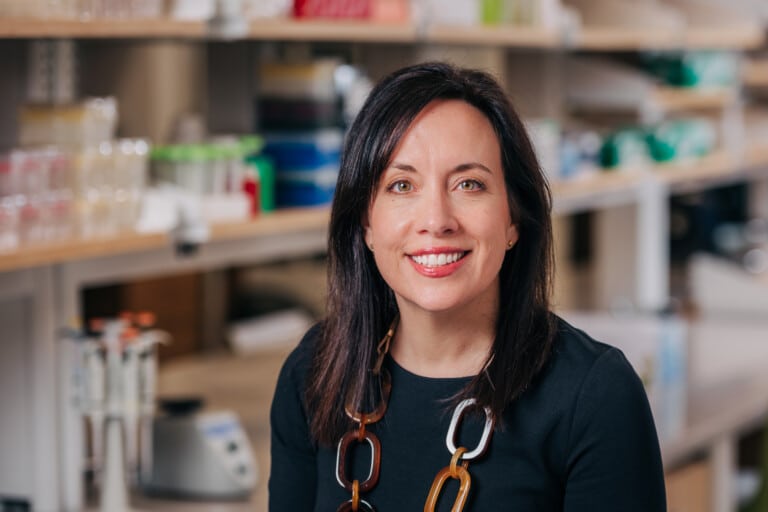
Meet ASN’s 2025–2026 President, Naïma Moustaïd-Moussa, PhD, DFASN, FTOS, FAHA. A dedicated ASN member since 1994, Dr. Moustaïd-Moussa has served the Society in numerous leadership roles, including Director At-Large for the Nutrition Science Mechanisms Research Interest Section, as well as on various committees and in other GEM leadership positions. Earlier this year, she was inducted into the 2025 Class of Distinguished Fellows of ASN (DFASN), the highest honor awarded by the Society.
Dr. Moustaïd-Moussa officially began her term on June 18, 2025, succeeding Sarah L. Booth, PhD, who now serves as Past President. We first spotlighted Dr. Moustaïd-Moussa’s work in 2023, and in the following interview, ASN’s Member Engagement Coordinator, Sara Genell, reconnects with her to discuss her presidential priorities and vision for ASN.
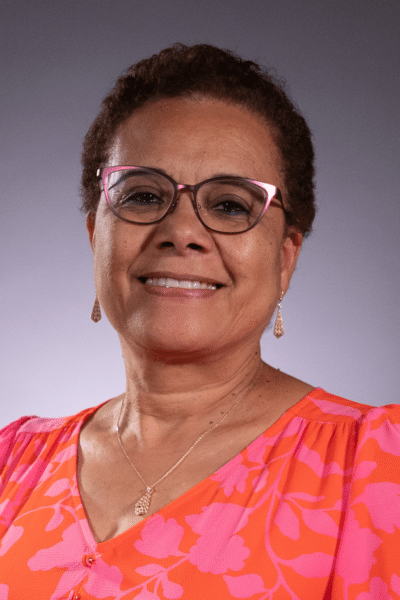
Naïma Moustaïd-Moussa, PhD, DFASN, FTOS, FAHA
2025-2026 ASN President
Texas Tech University
Sara Genell: Thank you, Dr. Naïma Moustaïd-Moussa, for participating in this member spotlight interview. Your interview from December 2023 introduced you, your background, and involvement with ASN, so for this interview, I’d like to focus on your presidential priorities, if that’s alright with you.
Dr. Naïma Moustaïd-Moussa: Hi Sara, thank you for giving me the opportunity to address the Society. Let’s dive right in.
Genell: Great! To begin, can you highlight a couple of your presidential priorities and how you plan to achieve them during your term?
Dr. Moustaïd-Moussa: Two of my presidential priorities relate to expanding and strengthening global partnerships. While ASN is US-based, it is a global society as its members come from 115 countries from around the world. We already have several ongoing partnerships with international nutrition societies or associations that I have been working on with ASN staff, especially with Senior Vice President, Business Development and Sales, Dante Preciado, and our Chief Executive Officer, Dr. John Courtney. One of my priorities will focus specifically on partnerships with Africa and MENA (Middle East and North Africa) countries, and South America, as well as engaging with specific international organizations interested in nutrition science and/or food systems such as the International Atomic Energy Agency (IAEA) and the Consultative Group for International Agricultural Research (CGIAR). To do so, I am actively communicating and engaging with leaders from these organizations to identify effective collaborations of mutual interest that advance nutrition science and benefit our members. My other relevant priority with a global reach is to expand ASN’s role in advocacy, policy and education in the US and abroad to support its members. An important goal here is to advocate for nutrition research and education nationally and globally, with emphasis on developing the nutrition workforce and our future leaders, and to advocate for the importance of appropriate funding and training to support this nutrition workforce. ASN’s Chief Science Policy Officer, Sarah Ohlhorst, has already been doing exceptional work in nutrition policy and advocacy, and I look forward to working with her to further advance this area. These partnerships add value to our members, support the ASN 2028 Vision, and increase ASN’s role as a premier nutrition society, as we provide opportunities for ASN members locally, regionally and internationally, to collaborate, share mentoring opportunities, and increase nutrition knowledge across the globe. These priorities will engage our ASN members from private, government and academic institutions in the US and worldwide, across the different areas of nutrition research, education, and practice.
Genell: Are there any specific initiatives or programs you’d like to implement or expand upon during your term?
Dr. Moustaïd-Moussa: I have continued to attend ASN meetings since 1994, from the EB meetings to NUTRITION meetings and I enjoy learning from the breadth of nutrition research and practice being presented during our flagship annual meeting. However, there is also great value in interacting in smaller groups around specific topics of interest to various members, especially for our early career members. Such opportunities will reengage more basic science researchers in ASN. For this reason, I will be working with ASN members, staff and the Board of Directors to develop regional conferences and workshops on specific topics related to nutrition. Professional development activities for early- and mid-career members will also be included. This will be achieved by working with ASN members, GEMs and ASN staff, namely Gwen Twillman, ASN’s Chief Programs and Advancement Officer and Felicia Price, ASN’s Chief Administration Officer and ASN Foundation (ASNF) Executive Director. Besides GEMs, other important partners in this initiative include the Academic Nutrition Departments and Programs (ANDP) Community, our Sustaining Partners (SP), and various relevant nutrition-related professional societies and organizations. Given the cost involved, this will also require exploring revenue opportunities for sustainability of new and existing conferences through grants, sponsorship and other financial support. Specialized conferences such as these could also be organized as pre- or post- NUTRITION events, as well as incorporated into the annual meeting schedule for maximal involvement. I envision that this will increase overall member participation in areas of interest to them, reengage and increase involvement of basic scientists but also other areas of nutrition science and practice. I look forward to hearing from ASN members who are interested in helping organize or participate in these scientific conferences and programs.
Genell: Speaking of our annual NUTRITION meeting, you have transitioned into your Presidential term just after our flagship annual meeting, NUTRITION 2025. What were your biggest takeaways from the meeting this year, in terms of trends and/or the state of the field?
Dr. Moustaïd-Moussa: NUTRITION 2025 was a great conference highlighting state-of-the-art science, from basic, translation, and clinical research to community/population research, policy and practice. There was a wealth of information and new knowledge presented. A few important topics remain present and relevant year after year ranging from maternal-child health, and prenatal nutrition to various bioactive compounds that improve health. This year at NUTRITION 2025, we had two new award lectures through partnership of the ASNF and the Novo Nordisk Foundation (NNF) that sponsored these awards, which funded two exceptional scientists: the 2025 ASNF-NNF Flemming Quaade Award for Innovative Approaches in Childhood Obesity by Dr. Andrew Agbaje, University of Eastern Finland, and the 2025 ASNF-NNF Henrik Dam Award for foundational and translational nutrition research by Dr. Julia L. Finkelstein from Cornell University. The Opening Session highlighted another timely topic on food security and food access during periods of emergencies, natural disaster and war situations and the importance of attending to nutritional needs during such challenging situations across the lifespan. The importance and role of the gut microbiome and gut health in health and disease remained a key topic this year as well, with several presentations on rigorous approaches in this field, from methodologies, data collection and analyses to interpretation to impact. Other timely lectures highlighted where ASN members and the nutrition field can make a difference. This specifically pertained to anti-obesity drugs (GLP1-RA), that often come with potential malnutrition, thus the importance of raising awareness of the nutritional needs and requirements of patients on these effective medications. Last but not least, I am very proud to see ASN continuing to support and engage early career scientists, especially during these challenging times for the workforce in academia or government. There were many presentations and award competitions across the nutrition areas by early career members and many professional and career development activities, some of which were supported by our SPs.



Genell: ASN’s membership covers all career stages and many disciplines within nutrition science. How do you recommend members get involved with the Society to grow their networks and careers?
Dr. Moustaïd-Moussa: Nutrition is a very broad multi- and trans-disciplinary field. I highly encourage ASN members to maximize their participation in ASN and ASN conferences which provide an opportunity to learn about many relevant topics that may help them further elevate the work they do. Some members may only attend sessions related to their specific research at NUTRITION conferences, but by doing so they are missing opportunities to potentially expand their work into new and novel directions. Poster sessions and networking events are great opportunities to meet potential new mentors and collaborators from across the globe and increase our knowledge. There are many opportunities to volunteer in GEMs. This is how I started my involvement in ASN back in the 1990s. I joined the Nutrient-Gene Interactions Research Interest Section (NGI RIS) back when I was a new assistant professor. Through the NGI RIS, I met many colleagues and collaborators that enriched my career and shaped my research trajectory; I also went on to serve as Chair of the NGI RIS and continued to be involved in ASN in various scientific and leadership capacities.
Genell: Thinking back to your interview with us from December 2023, how has your perspective evolved, if at all, now that you are stepping into this new role as ASN President?
Dr. Moustaïd-Moussa: Increasingly, we all realize that our world is very interconnected, as highlighted most recently by the COVID-19 pandemic. I firmly believe that exchange and sharing of knowledge is very important. Scientists do this, but this exchange becomes even more valuable when shared across the globe, not just within one country or one region. At the current time, nutrition is an even more critical area to advance, not only within human nutrition or food science but also through integrating the One Health approach to understand how our interactions with animals affect our health and nutritional status, and how environmental contaminants or pollutants such as PFAS and microplastics, or extreme weather conditions such as drought and floodings or natural disasters affect human health (and animal health) and how nutritional status may contribute to the spread of or aggravate infectious diseases. Situations may be different from one region or country to another, but we can learn from each other through exchange of information and knowledge. That is why you see One Health as one of my priorities.
Genell: You are the executive director of the Institute for One Health Innovation. In what ways will you bring a One Health perspective to leading ASN? Why do you feel it is important to take a One Health lens when conducting nutrition research?
Dr. Moustaïd-Moussa: One of my priorities is to raise awareness about the importance of the One Health approach in nutrition research, education and practice. One Health is the most sustainable approach to achieve optimal health for all, by recognizing that the health of animals, humans, plants and ecosystems are closely connected and intertwined, and we must view health and healthcare more holistically. One Health integrates disciplines from basic nutrition and food sciences, or plant and animal sciences, to environmental health to solve challenges in our food systems that impact human nutrition and health. Towards this goal, we recently published an editorial on Advancing One Health in The Journal of Nutrition where we also announced a special issue on One Health inviting ASN members to showcase their research in this area. The editorial provides some additional examples of the intricate role of One Health in human nutrition and health. An example that many can relate to are food systems and agricultural production and practices, focused on the role of soil health in human health; specifically, how soil quality and microbial composition impacts crops’ (food) nutritional value and content, which in turn affects animal or human health. We also know that conditions such as extreme temperatures, drought, flooding, and other environmental factors can change these interactions. These are all current and continuing challenges that require multidisciplinary experts to work together and contribute the expertise needed to solve these challenges. In addition to this special issue, I look forward to more programming by ASN on the topic of One Health including at NUTRITION 2026 and throughout the year. These activities further support ASN’s 2028 vision, ASN journals’ reach and visibility, and provide opportunities for more collaboration with industry, animal, food and environmental sciences and agricultural disciplines and organizations.
Genell: How do you think (or hope) the field of nutrition science and practice will evolve in the next 10 years? What is ASN’s role in this evolution?
Dr. Moustaïd-Moussa: We have seen the increased prevalence of emerging infectious diseases but also the sustained increase in non-communicable diseases such as obesity and diabetes; and these will continue to pose economic and health burdens. Nutrition research may be at the center of solving these challenges. We have made significant progress in the past decade towards precision and individualized nutrition through the development of sophisticated omics tools and nutritional assessment tools. However, much work remains to be done to achieve true precision nutrition. We still rely on self-reported data, and many advanced methods used in the clinic are not always easily transposable to the community. Methodologies have been improved to more accurately measure food intake and assess biomarkers of health including research on gut microbiota or their metabolites that affect health. However, implementation of these advances at the community level are not there yet and much remains to be done on translating findings from microbiome research into therapies. I anticipate that Artificial Intelligence (AI) will play an increasingly greater role in implementing precision nutrition and in translating and accelerating research applications into clinical practice. As mentioned above, emerging infectious diseases are major threats, and we do not fully understand the role of nutrition deficiencies or malnutrition on the spread of these diseases in animals or humans.
Genell: Thank you again, Dr. Moustaïd-Moussa, for addressing our Society through this spotlight interview. Are there any closing remarks or call to action you would like to leave with the ASN members reading this interview?
Dr. Moustaïd-Moussa: ASN has had a great impact on my career and professional development, and I highly encourage our members, especially early- and mid-career members, to actively engage in ASN and help guide and shape the future vision of ASN and nutrition research, education and practice. This is such an important time for nutrition science, as our field plays an increasingly critical role in shaping national and global health. ASN members have a big responsibility to ensure that we are guided by evidence-based nutrition. We must also communicate what we do to our stakeholders and policymakers. Related to my priorities, I look forward to hearing feedback from our members and partners, and to see them engaged not only in these priorities, as relevant, but overall to advance nutrition science and the ASN 2028 vision to achieve a healthier world through nutrition.
In closing, thanks so much Sara for this comprehensive interview, and I would like to take this opportunity to also thank all ASN staff for their dedication and the great work they do to support ASN and its members.