
The nutrition community is made up of individuals with diverse experiences, perspectives, and ideas. This diversity is the fundamental strength of our professional society. Through this member spotlight series, we celebrate our diversity and the vast achievements made by our members in the field.
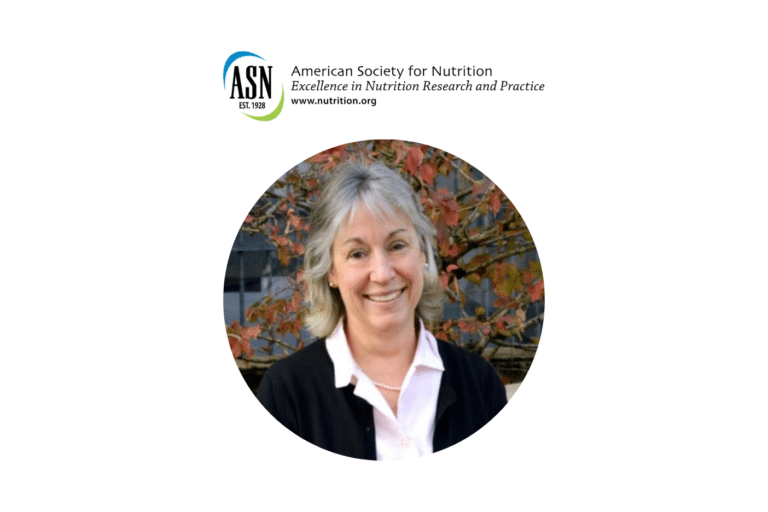
Meet ASN Member Dr. Maha Tahiri, whose journey in nutrition science spans continents, sectors, and a wealth of impactful experience. Learn more about Dr. Tahiri’s perspective on innovation in nutrition and food and how it is essential for addressing global challenges such as improving public health, reducing chronic diseases, and ensuring food sustainability in a conversation with ASN’s Member Engagement Coordinator, Sara Genell. Her deep-rooted passion for nutrition, sparked by the diverse food cultures of Morocco and France, has driven her career mission to positively impact the health of people and the planet.

Sara Genell: Thank you, Dr. Tahiri for participating in this member spotlight interview. For those who haven’t met you, can you briefly introduce yourself and share what sparked your interest in nutrition science?
Dr. Maha Tahiri: I was born and raised in Morocco, and I’ve had the privilege of living in both Europe for 24 years and the United States for 12 years. I hold a PhD in human nutrition, and over the course of my career, I’ve had the opportunity to work in various sectors within nutrition science. Most notably, I served as the Chief Health and Wellness Officer at General Mills and led innovation for Danone, where I worked on innovative strategies to improve public health through food.
In 2018, I transitioned to becoming the CEO of Nutrition Sustainability Strategies, a consultancy that helps companies enhance their impact on the food system with a focus on sustainability and nutrition. My interest in nutrition science was sparked early on, as I grew up surrounded by the rich, diverse food cultures of Morocco and France. This experience shaped my understanding of how deeply nutrition influences health and well-being. I wanted to pursue a career that impacted people’s lives and working for the industry was a great way to do it. Since then, I have been equally focused on impacting people’s and the planet’s health.
Genell: Being surrounded by diverse food cultures sounds like a surefire way to become interested in the relationship between nutrition and health and well-being! I am curious how you became involved with ASN and how has your career evolved through your membership?
Tahiri: My involvement with ASN began when I was a student, eager to learn from the best minds in the field. ASN provided me with a platform to connect with other passionate individuals and gain insight into the latest research and innovations in nutrition science. As I transitioned into my career, ASN remained a critical part of my professional journey. For example, sponsoring the Bell Institute Award for Educators was a significant honor that recognized the work of many in promoting nutrition education. Additionally, being part of the Strategic Oversight Committee has allowed me to contribute to shaping the direction of ASN and its impact on both academia and industry.
What I’ve valued most about my continued involvement with ASN is the ability to exchange ideas and collaborate with top-notch talent across diverse sectors of nutrition science. It’s truly the best forum for advancing crucial conversations about nutrition and helping to create meaningful changes in the nutrition landscape.
Genell: I am glad to hear that you have gained so much from your membership with ASN, especially during your time of transitioning from student to career professional. Switching gears now, I’d like to discuss innovation in nutrition and food. Why is this important and how can ASN play a role?
Tahiri: Innovation in nutrition and food is essential because it addresses some of the most pressing global challenges, such as improving public health, reducing chronic diseases, and ensuring food sustainability. Consumers face challenges every day and our role is to serve them by providing the best understanding of their issues and solving them in an innovative way. This includes finding new ways to make nutritious foods more accessible, utilizing cutting-edge science, food technologies, and developing food products that meet both health and environmental goals but most importantly by truly understanding consumers.
ASN can play a pivotal role in driving this innovation. As a leading organization in nutrition science, ASN serves as a hub where academic researchers, industry professionals, and policymakers come together to share knowledge, collaborate, and translate cutting-edge research into practical applications. By fostering interdisciplinary partnerships and providing a platform for dialogue between science and industry, ASN can accelerate the development and implementation of innovative solutions in nutrition and food. Additionally, ASN can support the next generation of scientists and innovators by offering education, resources, and opportunities to engage with emerging trends and technologies, ensuring that innovation remains at the forefront of addressing the global nutrition challenges we face today.
Genell: What areas of research are the primary drivers? What do you anticipate being the next big innovation to occur, and how will this impact global health?
Tahiri: I believe the key areas of research driving innovation in nutrition include the microbiome, which is revealing how gut health influences overall well-being, and the growing focus on sustainable nutrition, with developments in plant-based proteins and eco-friendly food production. These fields are shaping the future of food systems, but they still need to integrate the human side of the equation of nutrition. We need to understand the problems that we are trying to solve from a consumer perspective. The next big innovation will likely be personalized nutrition, enabled by advances in data science, genetics, and microbiome research. Tools like AI and genetic testing will allow individuals to tailor diets to their unique biological needs, improving health outcomes more precisely. ASN can play a critical role by supporting research, fostering collaborations, and translating emerging science into practical solutions that benefit public health globally.
Also, it is important to recognize that more and more people are turning to medication for weight loss and the role of nutrition is to help those individuals embrace a healthier lifestyle either as a companion of medication or, even better to transition out of medication with great habits instilled.
Genell: My last question for you is how can companies pursue nutrition innovation with global consistency and local autonomy?
Tahiri: Companies can balance global consistency with local autonomy by setting unified standards while empowering local teams to adapt strategies to regional needs. Cross-regional collaboration ensures shared insights, and flexible product development tailors solutions for local markets. This approach fosters innovation that aligns globally but is relevant locally. Also let’s not forget about start-ups and smaller companies that are leading in terms of disruptive innovation and integrate their thinking for scaling up great ideas by big companies.
ASN can play a key role by facilitating knowledge exchange between global and local experts, promoting research that is adaptable across regions, and offering a platform for collaboration between industry, academia, and policymakers. This helps companies innovate with both global consistency and local relevance, ensuring that nutrition strategies and solutions are scientifically sound and culturally appropriate.