
The nutrition community is made up of individuals with diverse experiences, perspectives, and ideas. This diversity is the fundamental strength of our professional society. Through this member spotlight series, we celebrate our diversity and the vast achievements made by our members in the field.
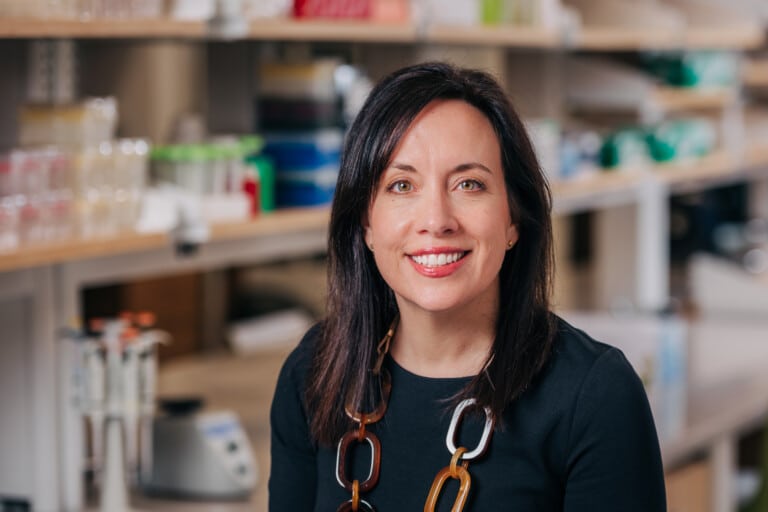
Meet Dr. Keith West, ASN’s Vice President Elect and George G. Graham Professor at The Johns Hopkins Bloomberg School of Public Health. In conversation with ASN’s Member Engagement Coordinator, Sara Genell, learn more about Dr. West’s journey—from his early days in Pennsylvania to a pivotal moment during the Bangladesh famine that shaped his career in global nutrition. Hear how decades of ASN involvement have broadened his vision of research and deepened his commitment to advancing evidence-based nutrition.

Sara Genell: Thank you, Dr. Keith West, for joining me today for this member spotlight interview. For those who haven’t met you, will you please introduce yourself and share what sparked your interest in global nutrition and public health?
Dr. Keith West: Thanks for this opportunity, Sara, to introduce myself to our Society membership. Briefly, I was raised in Upper Darby and Broomall, outside of Philadelphia, and attended Drexel as an undergraduate. Recruited to be an intern and RD in the US Army Medical Specialist Corps, I served at Walter Reed, Fort Dix, and on Okinawa – from where I took leave to visit Irish Concern working in Bangladesh, at the peak of famine in 1974. It was a life-and-career altering experience, as I left active duty and joined Concern in the late seventies to translate principles of dietetics into nutrition programs, where I learned how much I yet needed to learn. My doctoral work on vitamin A and child growth under the mentorship of a pioneering “nutritional ophthalmologist”, Alfred Sommer, was nested into the “Aceh Trial” in Northern Sumatra where we discovered alongside our Indonesian colleagues that vitamin A could reduce child mortality. We replicated the findings in Nepal, as did other groups elsewhere. These experiences taught me that once causal evidence is sufficient, the public health researcher’s role is to tirelessly advocate policy and implementation to achieve impact, a philosophy that has continued to guide my work in maternal and child micronutrient deficiency prevention. Global health pursuits can expand one’s personal life to dimensions that are inside-out of one’s career, blurring the lines, appreciating and having friends in other cultures while always treasuring time home with family, enjoying friends, and playing the guitar (having had one unforgettable night jamming with Cat Stevens in Bangladesh years ago).
Genell: Thank you for sharing your beginnings with nutrition science. At what point did you join ASN and what led you to get more involved?
Dr. West: I joined ASN and started receiving The American Journal of Clinical Nutrition in 1982, 4 years into my graduate studies. Throughout ensuing decades, the Society has helped expand my vision of research, what is new and possible, anchoring me in nutrition science through its journals, shaping ideas through conferences, connecting me with colleagues, and facilitating collaborations across the molecular-clinical-public health nutrition spectrum.
Genell: The Johns Hopkins Bloomberg School of Public Health is taking advantage of ASN’s group memberships for its graduate students and postdocs. In what other ways have you empowered your students and early career professionals to get involved in ASN and the broader nutrition science community?
Dr. West: Covering our graduate student memberships, starting their first year, has been one way to encourage early career engagement and, we hope, career-long involvement in ASN. We provide a George Graham Travel Scholarship, typically $1000, to a dozen graduate students with a first authored abstract accepted at our ASN annual meeting. It incentivizes both students and advisors! Additionally, we are able to add a $500 Barbara and Richard Hall Student Award for Excellence in Nutrition Science should a student’s abstract receive special recognition. Finally (so far), students who publish a first authored peer-reviewed paper prior to graduation receive a $1000 Harry D. Kruse Family Publication Award…. And this interview has prompted an idea that we could further incentivize a first paper appearing in an ASN Journal…These are modest cost ways, enabled by generous and envisioned donors and a very low student membership fee from ASN that we believe can catalyze next-generation research careers and Society membership.
Genell: You currently serve as ASN Vice President-Elect. What would you like to accomplish during your time leading the Board of Directors?
Dr. West: Across time and leadership teams, our ASN mission remains to protect health by advancing science, education and practice of evidence-based nutrition. By 2026-7, as President, I’ll have had an opportunity to learn, and an honor to serve, under our existing, stellar line of Presidents, Sarah Booth and Naima Moustaid-Mousa. Their priorities will become mine. I will work to protect our Society’s legacy of promoting trust in nutrition science, equity in early and mid-career opportunity, and to grow and connect our membership internationally and domestically.
Genell: What would you say are the biggest challenges that should be addressed by scientists to help improve health and wellness in the United States and globally? In which ways would you recommend addressing those challenges?
Dr. West: Each era presents its unique challenges, uncertainties and opportunities to advance nutrition science and its application to improve the public’s health. Our current period, leading up to our Society’s centennial in 2028, is no exception, and is exceptional. Globally and in the US, our molecular, clinical and public health nutrition priorities seem clear: work across sectors to prevent food insecurity, undernutrition and obesity, guide, amplify and assure access to nutritious foods throughout life, and continue advancing nutrition, food and political sciences to achieve these goals. However, perhaps the greatest challenge in our day is for our nutrition profession to remain steadfast in generating, reporting, protecting and advocating, through all communications channels, evidence-based solutions to the public we serve, in the United States and globally.
Genell: Lastly, what would be your advice for someone who is pursuing a graduate degree and planning to work in nutrition, to help them maximize the value of their ASN membership and advance their career in the field?
Dr. West: Join. My only regret about my ASN membership is that I joined mid-way through my doctorate, and not earlier! With affordable pricing, every aspiring early career nutritionist should join and engage! Network. Our Society provides amazing opportunities for graduate students across the molecular-clinical-public health spectrum to find colleagues throughout the world with whom to correspond, collaborate, learn and help advance each others’ careers as well as our global Mission. Plunge. Be active, get involved, join GEMs, attend NUTRITION, run for office, make ASN Connect work for you, and publish in our outstanding ASN journals.